


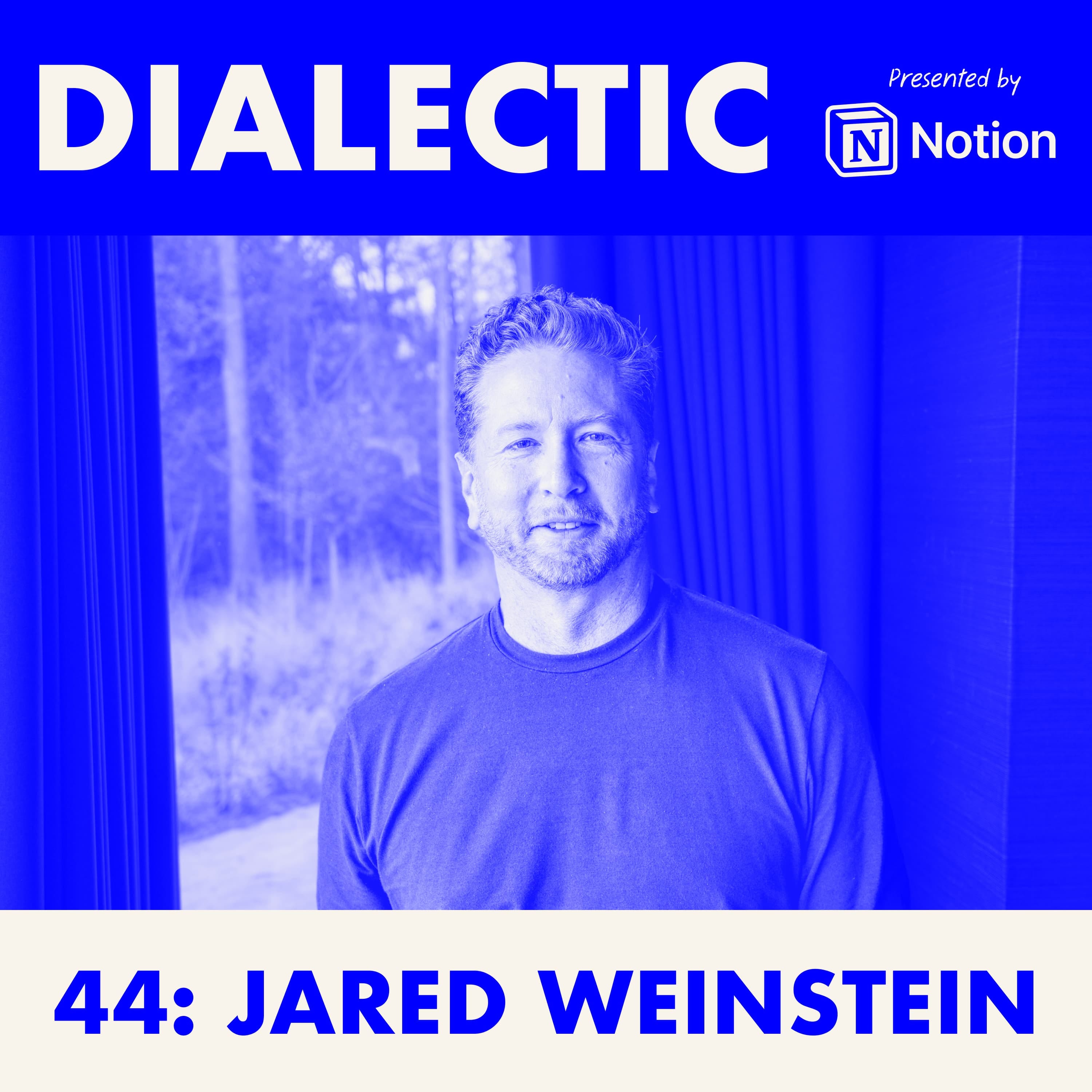
Jared Weinstein is deeply trusted and quietly effective. He is a friend to many. This is his first interview.
From President Bush, to Thrive's team and founders, to new leaders building in his hometown of Birmingham and globally, Jared is an amplifier of people.
Today, Jared runs Overton where he’s seeding emerging investment managers, making concentrated bets in high conviction entrepreneurs, and shaping the future of his hometown, Birmingham Alabama. Previously, he was a founding partner of Thrive Capital early advisor to Palantir, and personal aide to President George W. Bush.
I’ve been lucky to get to know Jared and benefit from his wisdom. I’m honored to have done this with him and I hope you enjoy it.
We discuss:
Cold-calling the Bush campaign in college, joining them in the run up to 2000, and not dropping out
Becoming the President's personal aide (or "body man") in his mid-20s, what the President does, and how little Jared slept
an unlikely partnership with Joshua Kushner
that led to over a decade building the now-legendary Thrive Capitalwhat it was like helping Palantir in the very early days
Bringing seriousness and humanity to work, whether the West Wing or investing
the three-body problem of ego, ambition, and impact
why people trust Jared and how he helps them become their best selves
east vs. west coast ambition, across DC, SF, and NY
how he's investing in Birmingham, why cities change and thrive, and helping people raise their ambition
championing those who champion you
Lessons and description below!
Dialectic Ep. 44: Jared Weinstein - Within Earshot, Out of Camera Shot
21 Lessons from Jared on Service, Humanity in Hard Rooms, and Amplifying People
Within earshot, out of camera shot. The personal aide’s motto and a philosophy of service. Close enough to hear what the principal needs; far enough that you’re never the story.
Seriousness and warmth don’t trade off, they compound. President Bush took the job seriously and the people in it joyously. The cheap version of intensity makes everyone brittle; the better version lets people bring their A-game without leaving their humanity at the door. High stakes and psychological safety are not at odds.
Kindness is honesty. Kindness is pushing someone, not letting them off the hook. Delaying the hard conversation does not preserve the relationship, it ferments resentment—especially when everyone already knows the truth.
Spend energy on the 50/50 decisions. President Bush didn’t want easy calls. If the decision was 90/10 obvious, a cabinet secretary handled it. His time was reserved for the ones where smart people made great cases on both sides, and someone still had to choose.
The calendar sees the big picture from below. Jared’s first White House job was booking the President’s time, and that’s how he learned the whole building. You see who and what actually matters by who gets on the calendar. Don’t underrate schedulers.
When the stakes spike, simplify and act. Jared’s crisis playbook came from rooms with no patience for finger-pointing. Get grounded in what is actually happening, return to your values, take the next step. Then the one after that. It is never as bad as it looks. It is never as good as it looks, either. Level-headedness isn’t a personality trait; it’s the discipline of focused action.
Repot before prestige becomes a cage. Advice from Tom Tierney. After the White House, Jared could have stayed in D.C. and compounded in the obvious direction. Instead, he chose Stanford, Palantir, and the opportunity to build a tiny New York venture firm that did not yet look inevitable. The risk was not stepping down; it was letting the last impressive room decide the rest of his life.
Choose the place that stretches your ambition. “East Coast ambition is getting from floor seven to floor fifty-seven; West Coast ambition is building your own building.” After his 20s in DC, West Coast ambition felt stranger and more destabilizing: why stay inside the building when you could make your own?
Be stubborn on vision but flexible on strategy. Most founders get this backwards: rigid on tactics, loose on why. Thrive stayed fixed on one vision: become the most impactful partner to the most transformative companies. The check sizes, industries, and playbook all flexed around it.
Storm the castle, don’t be the castle. Thrive’s orientation, whether hiring or building: stay hungry, stay climbing, act like there’s still a wall in front of you. The fear was the firm becoming the kind of place people joined because it had already made it.
Don’t relegate the back office. Jared disliked the phrase at Thrive and found it demeaning. The NASA janitor putting a man on the moon; the White House florist, the receptionist, the custodial lead at the firm: everyone plays a role in the mission. Treat them that way and they’ll show up that way.
Choose effectiveness over being right. Having the answer is the easy part; the challenge is getting another person to arrive there on their own legs. Jared would rather move someone one foot closer to the answer than win the argument about it, which makes him great at helping people help themselves.
Make your conviction legible. When Chris Paik called to say Thrive was making a mistake passing on Twitch, Jared didn’t disagree. He told him he’d done a poor job articulating why. Conviction isn’t enough; you have to bring your team with you.
Sit on the same side of the table. When Jared left Thrive, his colleagues wrote him a book of letters. The recurring note was that even as their boss, in disagreement, or across a deal, he somehow ended up in the chair beside them. Direct enough to say the hard thing, loyal enough that it never felt like an ambush.
Ego is fuel, not a map. Jared does not pretend ego is useless; he calls it a fuel, and sometimes a necessary one. But it cannot answer the better question: what life do you actually want when applause, money, and legibility stop being sufficient substitutes?
When do you use your best stuff? An exercise Jared passes around: list the specific accomplishments of your life when you were most yourself, then ignore the top-line categories and read the sub-bullets: the people, the texture, the tempo, the kind of problem. That’s your guidebook to authentic and excellent work.
The bus needs a sign. Jared is naturally low-profile, but big work requires legibility. If you want people to join, fund, support, or extend the mission, they need to understand what bus is moving and why they should get on. Legibility can come in many flavors.
Your ceiling is the best thing you’ve seen up close. The most ambitious thing someone can picture is usually the most ambitious thing they’ve seen. Outside SF or NYC, the reflexive complaint is access to capital, but money wires anywhere in thirty seconds. The scarcity is exposure to a higher bar, so founders’ ambition stretches to meet it and capital ends up chasing them.
Make Birmingham more Birmingham. The goal isn’t turning Birmingham into a knockoff of another city. It’s to make Birmingham more itself: stronger schools, better institutions, more opportunity, and enough belief that talented people can imagine building a life there.
Champion the people who championed you. Jared left Thrive partly to be with his mother, who is terminally ill. “There has been no bigger champion of Jared Weinstein in this world than Brenda Weinstein, and she needed a champion.” Careers are long. The window to return the favor is not.
Be a friend, first. When Jared talks about legacy, he does not reach first for power, wealth, or institutional status. He wants to be remembered as a friend who helped people become the best version of themselves, which is a remarkably soft answer from someone trained in very hard rooms.
Description
Jared Weinstein (LinkedIn, X) is an investor, advisor, civic leader, and founder of Overton. This is his first interview.
Jared spent his twenties in the George W. Bush White House, starting as a scheduling intern and rising to become the President’s personal aide. He went on to Stanford GSB, consulted for Palantir in its early days, and was a founding partner of Thrive Capital in NYC, helping build it into one of the most respected venture firms in the world over eleven years. After leaving Thrive in 2022, Jared returned to Birmingham to focus on Overton, where he invests in local founders, leads civic initiatives including Small Magic — an early childhood language development program — and works to make his hometown the best version of itself. He also continues to invest in startups, serve on boards, and seed and advise new investors. By his own words, he is busier than ever.
Despite his very serious resume, anyone who knows Jared will tell you that he radiates humanity. He has spent his career amplifying people and helping them become the best version of themselves.
We trace the arc of his career, talk about what it’s really like inside the Oval Office, what he admires about the President, and the unlikely pivots that led him beyond a prodigious start. We also discuss what he and Josh got right at Thrive in the early days, how high stakes environments can be psychologically safe, and how to support incredibly ambitious people. Then we talk about his theory of change for Birmingham, the work he is doing now, and his reflections on where he’s been and what he’d like to be known for.
I hope this conversation gives you a model for what it looks like to bring your full humanity into high-stakes work and inspires you to commit yourself to the people, institutions, and communities you believe in.
Dialectic is presented by Notion. Notion is an AI-powered connected workspace where teams think together and create their best work. Notion recently launched custom agents: helpful AI teammates that handle recurring work across your entire suite of tools. Automate you and your team’s repetitive tasks so you can focus on the deep work. You can learn more at notion.com/dialectic.
Timestamps
00:00 - Opening Highlights
01:40 - Intro to Jared
03:32 - Thanks to Notion
04:38 - Start: Being a “Friend” and Bringing Humanity to Serious Work
10:55 - From Duke to the West Wing
31:45 - Riding Shotgun with President Bush
59:27 - Starting Over Out West: Post-WH, Stanford, and Palantir
1:16:05 - Meeting Josh Kushner and Building Thrive Capital
1:44:37 - Founders, Humility, and the Three-Body Problem of Ego, Ambition, and Impact
2:06:41 - Leaving Thrive, Coming Home to Birmingham, and Overton
2:32:40 - Busier Than Ever: Mentors, Life in Acts, and What You Hope to Be Known For
2:49:11 - Thanks Again to Notion


