


I had a blast with this one. One of Dialectic’s most conversational episodes with one of my favorite people to talk to, the singularly energizing David Senra. Enjoy!
Dialectic Ep. 30: David Senra -
The Clarity of Commitment
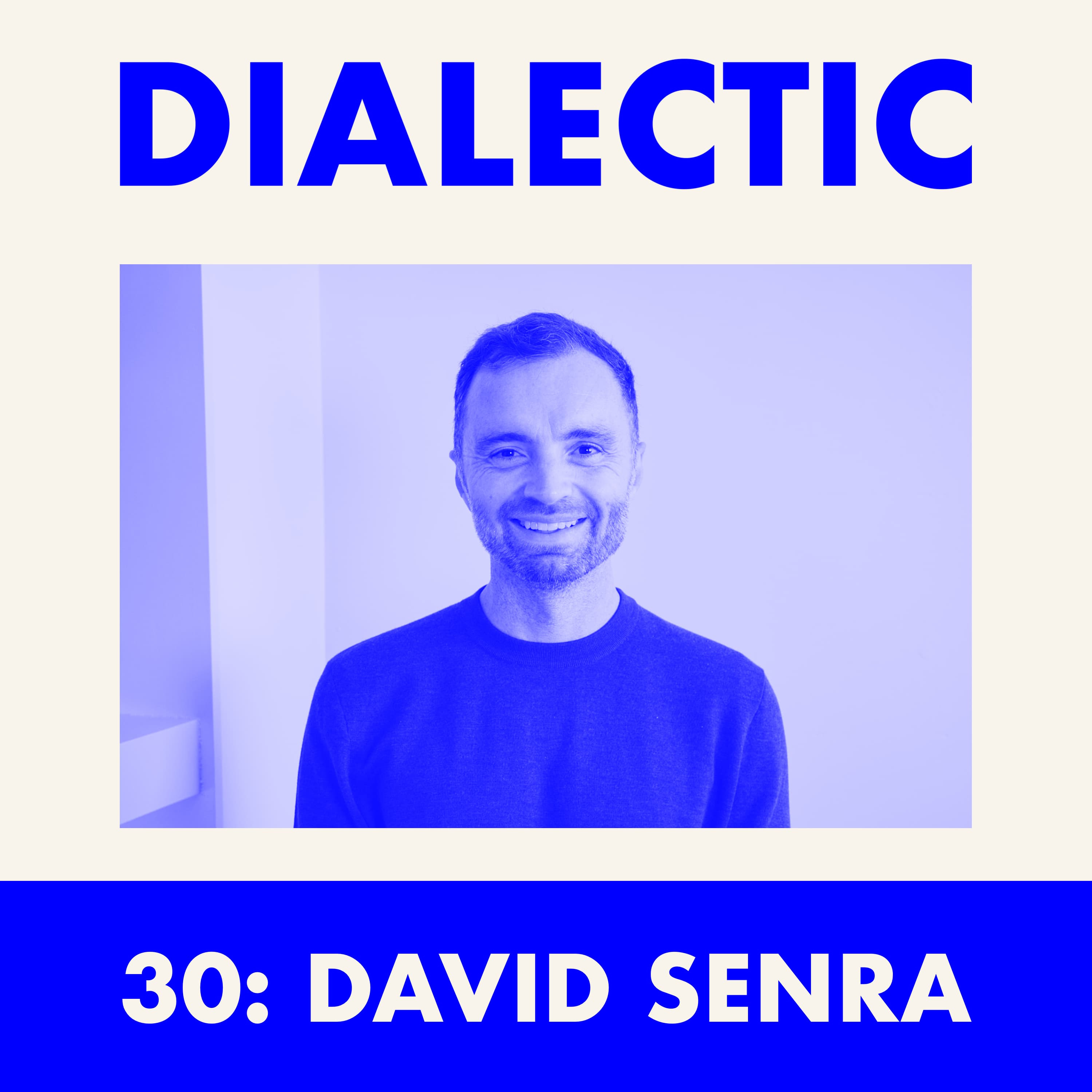
Dialectic Episode 30: David Senra - The Clarity of Commitment - is available on Spotify, Apple Podcasts, and YouTube, and all podcast platforms.
16 Lessons from David on Effort, Obsession & Other Competitive Advantages for Building Your Life’s Work
Don’t be afraid to repeat the hits. Repetition is persuasive. At church, they don’t talk about Jesus one week and some other guy next time. Elon repeats the same thing so much that the executives in the meeting can mouth the words before he says it. Buffett has been saying the same things for 60 years.
The audience is new. Relatedly, Claude Hopkins’ iconic 127-year-old idea: “You’re not advertising to a standing army, you’re advertising to a moving parade.” You think that every single person is paying attention to every single thing you’re doing. Nobody is. You’re the only person doing that.
Don’t underestimate “non-fiction marketing.” Simple descriptions of what you’ve made can be the most effective. James Dyson would write 200 words on a tag about how he made his vacuums special. Claude Hopkins was an ad copy legend with this idea. It can be especially true when you don’t think you’re doing anything special. Pull back the curtain and bring people into how something is made.
Study Your Favorite DJ’s Favorite. Most people study Steve Jobs and stop there. But the real insight comes from tracing the entire lineage, often over many decades. What about Edwin Land? When you find the original, you’re operating with the source code. Similarly: check the bibliography of the biography for hidden gems.
The best storytellers are the clearest thinkers. Clear thinking produces clear communication, which makes ideas easy to understand and spread. Reduce until clarity is what remains. And when you’re easy to understand, other people find it easy to help you.
The words don’t change, but you do. Re-read the best books. Re-visit films that moved you. Re-listen to impactful podcasts. We forget nearly everything and more importantly, we are someone new now, for whom the content has new wisdom.
There’s no test at the end of a book. That’s not the point. It’s about understanding. If you understand, then you might actually change your behavior.
Trust the ancient algorithms. People underestimate or under-prioritize their subconscious mind. It is much older than language. There is a kind of intelligence much wiser than you, and it takes the form of intuition.
It’s not for you, it’s for me. Make no mistake: Founders is an act of service for David. But that is only the exhaust of his maniacal obsession with finding the mentors he never had in the entrepreneurs of history. For many this is a joke; David’s most listened podcast is Founders.
Optionality doesn’t pair with greatness. Most of us can’t focus on anything for very long. Even when we do, there will only be more options as success compounds. Those who become the best in the world do not mistake the main thing.
Your life’s work picks you. Find something you won’t get bored of—especially the traditionally boring parts of it. David enjoys the biographies other people put down, not just the “best” ones. People maniacally obsessed with craft and service often end up wealthy, anyway.
Excellence is the capacity to take pain. Your ability to push through difficult & often boring things—reading dense books, enduring back-to-back failures—becomes a competitive advantage. If you apply considerably more effort over a longer period of time, by way of human nature, you will have less competition.
Quality trumps speed, always. No one’s going to remember if an episode is five days late, but they’ll remember if it’s great.
Get to your last business as quickly as possible. The longer you you compound, the deeper your specific knowledge. The returns to compounding (in money, in knowledge, and in life) are back-weighted. Rather than perpetually looking for the next opportunity, many of the greats got to their life’s work relatively early on.
Durability is a first-rate virtue. Charlie Munger’s big idea. We all talk about it, yet nearly everyone seeks growth at the expense of durability, especially in tech. Learn from history: The truly great people, products, and companies optimize for decades, not quarters.
Show your kids what it looks like to care about something. Your kids won’t remember your achievements as much as your engagement with work and life. When they see someone going through life genuinely obsessed with something—anything—they learn that level of intensity is possible. Maybe they too will seek to make something truly excellent that makes others’ lives better.
Description
David Senra (Website, X) is a podcaster and loves that title more than anyone. He hosts Founders, where he teaches the lessons of history’s greatest entrepreneurs by way of the biographies he reads of them. This week, he launched a second show, David Senra, where he talks to the greatest living entrepreneurs (often about the lessons from Founders).
The first episode with Spotify Founder & CEO Daniel Ek is available now, and the show is in partnership with Scicomm Media, the team behind Huberman Lab.
David is an enthusiast about four things: entrepreneurship, reading, history, and podcasts. His two shows are the articulation of those obsessions in a form of service for the rest of us. He is following Charlie Munger’s advice: “take a simple a idea and take it seriously.”
David is one of the most energizing people I’ve ever met and has greatly inspired my work. I’ve had several multi-hour conversations with him that left me buzzing afterward, and I’m pleased that this is no exception. We cover many of his favorite lessons and founders, his process, biographies, focus, fear, endurance, service, and legacy.
I hope you are inspired to commit yourself to something worth your days and years.
Special thanks to Josh Kale for producing this episode. Please check out his show Limitless on frontier technology and AI.
Timestamps
(0:00) - Open
(1:49) - Intro
(3:02) - Podcasts are Energy Transmission
(7:52) - People Buy Simple Stories
(12:38) - Repetition Doesn’t Spoil the Prayer
(16:11) - Trust in Brands and Products (and Podcasts)
(19:40) - Continuous Improvement and Speaking to a Moving Parade
(26:18) - Confidence and Simplicity
(34:55) - What Makes a Great Biography and Biographer
(42:17) - Humanity in Context: Why Biographies are So Practically Helpful
(48:52) - Fear
(54:32) - Self Reflection and Commitment
(1:06:52) - Considering Stuff Beyond Podcasting
(1:10:40) - Focus and Making Time for Relationships
(1:14:00) - What Should David Delegate?
(1:24:36) - Advice for 2017 David
(1:28:21) - Storytelling and Clear Thinking
(1:32:19) - Defying Rationality and Creating Magic with Obsessive Details
(1:38:09) - Self-Deception and Understanding Who You Are
(1:45:01) - Intution
(1:48:34) - Being Easy to Interface With
(1:52:26) - Biography Most Founders Would Benefit From: James Dyson’s Against the Odds
(1:57:05) - Simplicity and Edit Before You Make
(2:02:42) - Lesson for Tech People: Learn from History
(2:06:14) - What David Hopes His Kids Say About Him
Referenced Links
There are many, many links, so please check out my site for all of them.


