



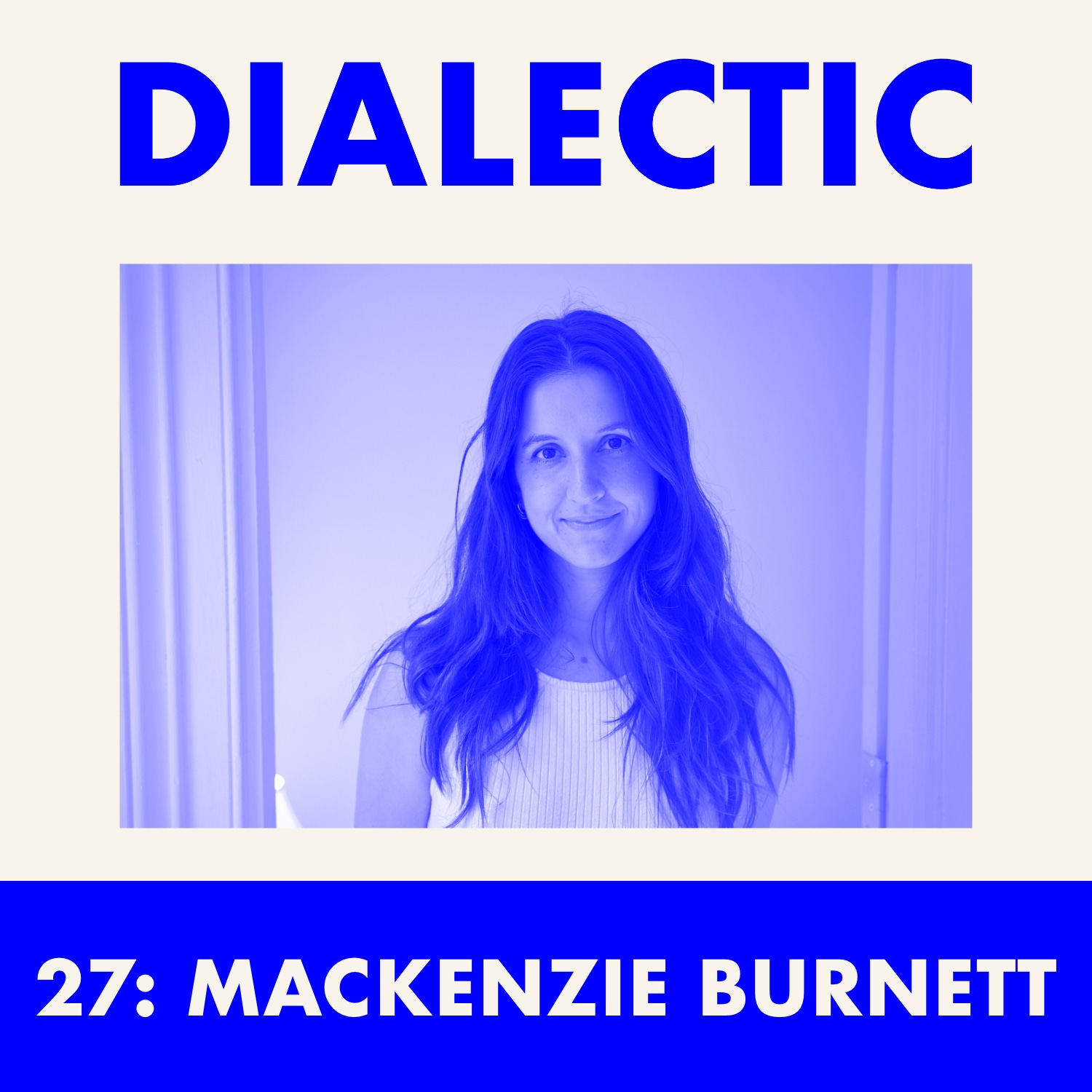
Excited to share another episode with a friend and some I deeply admire: Mackenzie Burnett, founder and CEO of Ambrook. Mackenzie’s goal is enable all kinds of independent small businesses that embody the American dream, starting with farmers, by way of better financial tools.
It’s also the first video episode I’ve actually produced (with some serious help from Josh). It’s set in Mackenzie’s beautiful New York apartment and I’m happy with how cozy the conversation feels.
Mackenzie’s ambition and care for America in big and small ways is an inspiration. See the substack-specific notes and highlights below, along with description and more. Full transcript available on my website.
Dialectic Ep. 27: Mackenzie Burnett - Accounting for America
Highlights & Notes from an episode on pragmatic idealism
The American Dream is optimism that your children’s future will be better than yours. Optimism is the leading indicator of economic cycles.
The American Dream also requires plurality because not everyone’s dream is to be a millionaire. Holding space for multiple futures makes a stronger society.
The government isn’t all good or bad; rather, it’s a slow-moving ship steered by millions of people responding to incentives. Too much faith or too little faith in it misses the point.
Climate change sits in the worst box of human sensitivity (for acting on): long-term, abstract, and thus difficult to prioritize.
People only change their minds when they see tangible impacts, like melting Arctic ice, rising seas, and wrecked bases.
Ideological climate policy backfires. Pragmatic, win-win solutions (like cheaper solar-powered alternatives) actually stick.
Farming is America’s first entrepreneurship story.
Farms are biological factories with multiple P&Ls. Managerial accounting—not vibes—tells you where the margin lives.
Great tools let people engage with intellectual complexity instead of completely avoiding it.
Average teams will use AI to ship fast but decelerate over time. The best teams will use AI to compound and accelerate over time.
True independence is not just about money. It’s ownership of your time, work, and, in some cases, physical space/land.
All roads lead to accounting. Without it, you’re guessing. With it, you reduce anxiety and promote long-term thinking.
Founders aren't risk-tolerant—they're just better at de-risking potential failure points before they become full-blown problems.
A CEO’s job is to make the intractable tractable by breaking down overwhelming problems until they can be solved by the team.
Stay illegible until you're ready to be interpreted by the world and society at large.
Making something, either creatively or building a business, is the ultimate manifestation of agency.
Description
Mackenzie Burnett (Website, X) is the co-founder and CEO of Ambrook, financial software for independent businesses starting with farms and ranches. We trace her arc from a policy-first upbringing (USDA household, Congressional internships, climate-security research at Stanford) to a building software for rural America.
We talk about why Mackenzie loves America and cares about agriculture, the challenges of aligning sustainability with business and government, and pragmatically building resilience. Mackenzie talks about the American Dream and why independent small businesses are the foundation of it in many ways.
Then we get into Ambrook’s product philosophy: why “all roads lead to accounting,” how multi-P&Ls and biological inventories make farms deceptively complex, and why understanding bookkeeping and move movement enables better decision making and understanding over the long run for big and small businesses.
We also talk through Mackenzie's broad ambition for Ambrook; her growth as a leader; brand, aesthetics, and environment; Ambrook's editorially independent research division, Offrange, and more. Mackenzie is one of the most quietly ambitious and focused people I've met, and yet under her impressive and serious exterior is a life and love for America and its people that is all heart.
Special thanks to Josh Kale for his help producing this episode.
Timestamps
00:01:11 Intro
00:02:51: The American Heartland
00:05:21: Agriculture, Policy, and Government
00:12:29: The Challenges with Prioritizing Climate Risk: "Long Term and Abstract"
00:18:04: Pragmatic Environmentalism and Resilience that Drives Business
00:21:49: The American Dream
00:25:52: The Importance of Independent Small Businesses
00:28:58: Entrepreneurship on the Frontier: America's First Entrepreneurs and Ambrook's First Customers -- Farmers
00:36:28: Biological Factories: Why Farms are Complex Businesses
00:40:41: Why Everything Goes Back to Accounting
00:44:30: Why Money Movement Matters
00:51:13: Ambrook as a Twenty-Year Container
00:57:27: The National Importance of Agriculture
01:00:49: The Features of Illegibility
01:04:49: Ambrook's Long Term Vision
01:10:17: Making the Intractable Tractable (And Doomscrolling Your Company's Slack)
01:14:42: De-Risking and Becoming Friends with Anxiety
01:17:26: Building Something That Takes on a Life of its Own
01:20:07: Ambrook's Culture in Three Words
01:21:26: Brand and Storytelling
01:26:11: AI Enabling the Middle Class
01:30:57: California History and J.G. Boswell
01:34:05: Niche Subjects and History and "The Land Where Lemons Grow"
01:36:46: Disney's Magic Band
01:39:15: Strange Math and Happiness and Sadness in Parallel
01:41:31: Aesthetics, Beauty, and Physical Design Systems
01:47:31: The Draw to Start Things
Links & References
Dubai Chocolate Made Pistachios Viral, But Are Small Farmers Winning? - Offrange
AI Could Actually Help Rebuild The Middle Class - David Autor
From plows to platforms: how Stripe is powering modern agriculture
Dialectic is available on all platforms.


