



Craig Mod is a wise man. I’ve spent a lot of time since we recorded this thinking about what he shared. The main thing is looking closely.
A favorite excerpt from an old piece of his:
Looking closely at dang near anything might very well be the key to it all.
The point being: Looking closely is valuable at every scale. From looking closely at a sentence, a photograph, a building, a government. It scales and it cascades — one cognizant detail begets another and then another. Suddenly you’ve traveled very far from that first little: Huh.
Craig is a writer, photographer, and walker. He’s (mostly) lived in Japan for the last 26 years, since moving there at 19 with no plan. He’s built his life around rigid constraints and refused to compromise again and again. He is committed to deep attention and having the freedom to write and make great books: most notably, a walking memoir called Things Become Other Things.
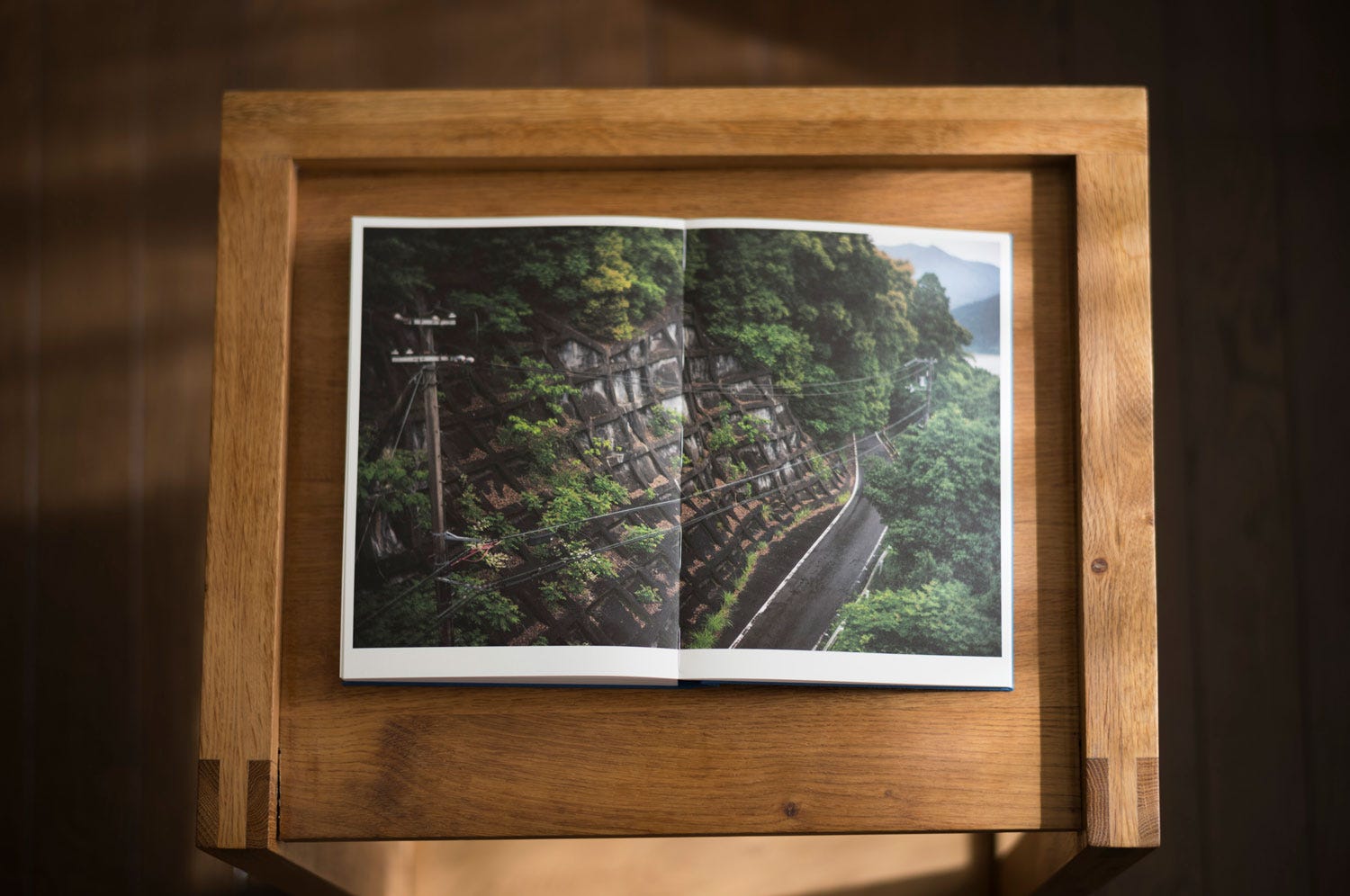
There’s a bit at the beginning of the book that has also stuck with me. Craig talks about the Japanese idea of yoyu — a kind of abundance that leads to abundance. And he writes to an old, lost friend:
Life, irrepressible, it billows over the top of the pot, man.
Let me be your eyes as best as I can. I’ll bear witness to this wonder you never got to see.
I hope you enjoy the conversation with Craig. May you and I both be inspired to look more closely and to commit ourselves without compromise to what we hope to create.
Available everywhere:
65: Craig Mod - Iron Filings In The Chest
Description
Craig Mod (Website, X) is a writer, photographer, and walker who has lived in Japan for 26 years. He is the author of Things Become Other Things and Kissa by Kissa, writes the newsletters Roden and Ridgeline, and funds all of it through his membership program, SPECIAL PROJECTS.
Beyond his writing, Craig is best known for his long walks across Japan, which he does under strict rules: no news, no social media, no podcasts, and a few thousand words written every night. He has built his whole life the same way. He decided early what he wanted to protect, which was his attention and the freedom to make books, and for about thirty years he has kept his costs low, lived in small rooms, and turned down the jobs and money most people would have taken.
We talk about containers and why rigid boundaries create freedom, how wealthy people can live very small lives, and the feeling in his chest he has followed since he was nineteen. We discuss whether you can take the job to fund the art, whether people can change after 25, and why books are a perfect technology. We also cover phones and boredom, deadlines and hitting doubles, and reflections on Japan and New York City.
I hope you’re inspired to find the thing(s) you won’t compromise for and to give your attention generously to what is in front of you.
Dialectic is presented by Notion. Notion is a collaborative workspace for your life’s work and the place to keep the memory, context, skills, and documents you and your team use to work with AI. As you move between different agents and tools, Notion is the shared hub where all of that context lives. Models and agents keep changing fast, and Notion stays the reliable place that holds your context through all of it. Learn more at notion.com/dialectic.
This episode is supported by Google DeepMind. I used Gemini 4 to build Personal Issue, a custom Dialectic-inspired edition made just for you. Give it a short prompt about something you’re working through, answer one follow-up question, and it reads every transcript from the show with your prompt in mind. It then brings together a couple of guests’ ideas to support you and one guest to push back. It runs on a combination of Gemini 4 models, including Gemini 4 Hydrogen, which is built for speed and efficiency.
Press your own Personal Issue here, and explore the latest Gemini models in Antigravity, AI Studio, the API, or the Gemini app.
Timestamps
(0:00) Intro: Craig Mod
(3:04) Start: Containers, Rules, and Rigid Edges
(9:07) Distraction, Small Lives, and the Energy in the Chest
(17:49) Never Compromising and What He’s Walked Away From
(22:49) Kevin Kelly, Wealth, and People Better Than You
(30:15) Compromise, Conviction, and Leadership
(38:25) Technology’s Middle Path
(49:13) Why Books Are a Perfect Technology
(55:01) The Job That Funds the Art and Changing After 25
(1:00:21) Trying the Other Path
(1:08:23) New York, Japan, and Belonging
(1:34:03) What Becomes a Book, Deadlines, and Hitting Doubles
(1:43:58) Boredom and Looking Closely
(1:56:59) Closing Questions: Conversation, Reading, and Mind Follows Body


